
What Wyoming County Deed Records Show
Wyoming County deed records live with the County Clerk. The office files transfers and other land instruments for local parcels. A smart Wyoming County property search starts with a grantee name to find the deed into an owner. Then it works the grantor on that instrument to trace the chain backward. An assessor card can hand you a deed book and page, but treat it as a starting key rather than the answer. The county publishes no live deed-index portal or online image range. A full search may take a request to the Pineville record room plus a look through the historical books.
| Deed Type | What It Does | Common Use |
|---|---|---|
| Deed of conveyance | Transfers an interest in described land | Sale or other conveyance; read the grant clause |
| Trust deed | Secures an obligation against land | Financing; later search for a release |
| Executor or administrator deed | Conveys estate property through a fiduciary | Probate transfer or court-authorized sale |
| Trustee's deed or report of sale | Records a trustee transfer or sale step | Foreclosure trail; pair with the court file |
| Release or corrective deed | Ends a recorded claim or fixes a prior instrument | Search with the original parties and property |
Each instrument does a different job. A deed conveys an interest. A mortgage or deed of trust secures debt. A release can later discharge that claim. The Wyoming County clerk also records plats, judgment liens, and other writings. Read the instrument type. Read its text before treating an index entry as proof of a current owner.
Wyoming County Deed Books at the Clerk
The County Clerk anchors Wyoming County deed records at the courthouse in Pineville. The record room sits on the ground floor at Bank and Main streets. Mail goes to P.O. Box 309, Pineville, WV 24874. The published phone is (304) 732-8000, with weekday hours of 8 a.m. to 4 p.m. Confirm hours and the current record-copy process before making the trip. The official clerk page lists deed, trust deed, release, UCC, judgment-lien, will, and probate functions. It links no online grantor-grantee search. Ask whether the clerk can search by party, book and page, instrument number, or plat reference. Ask too whether copies come by mail or at the counter. These Wyoming County deed records may sit beside related releases or plats in the index. Name the instrument type when you ask the record room for a search. That office list also hints at something bigger. A title question rarely ends with the deed book alone. A release can show an earlier secured claim was discharged. A plat can explain a lot reference. Probate or a judgment lien may account for a later change in the owner of record. The Clerk's page publishes no instrument-level field list. So put the exact document type and date range in your request. See the Wyoming County Clerk's real-estate records page. It lists the office's deed and land-record functions.
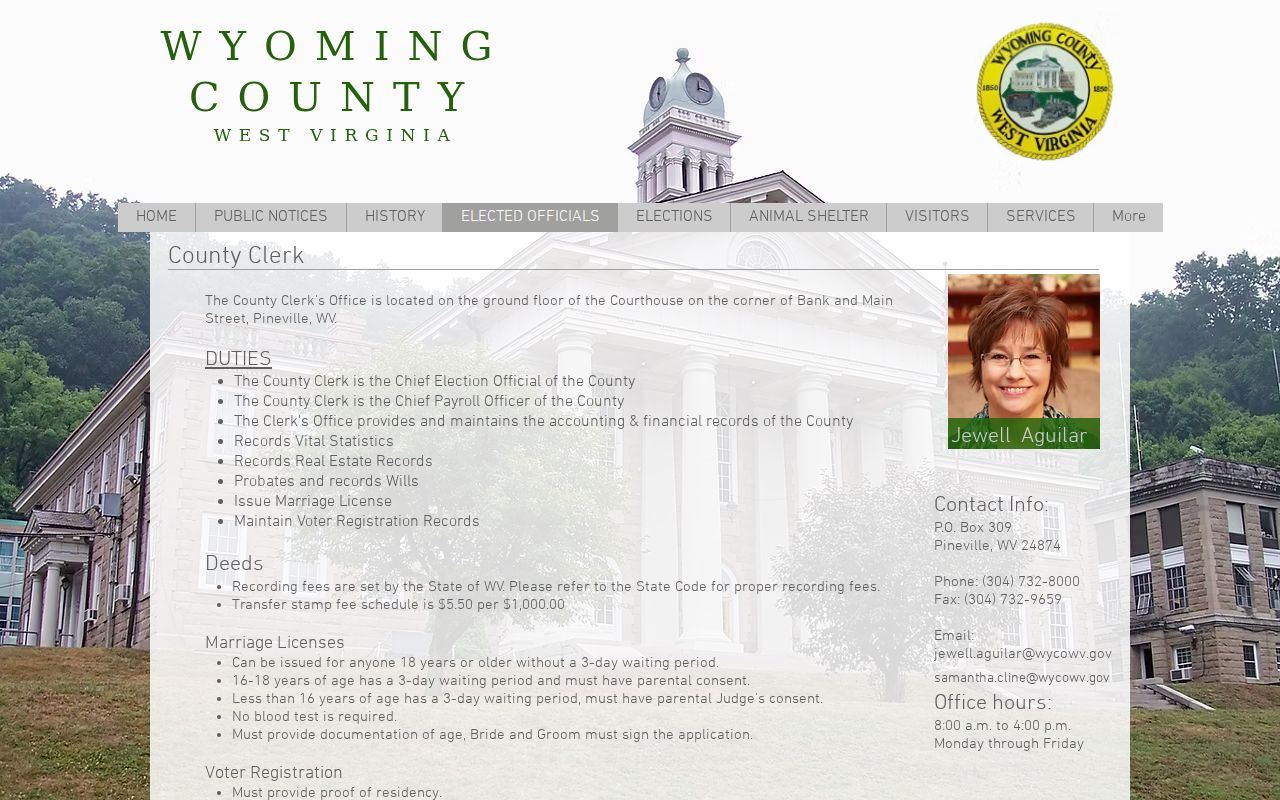
Confirm the current procedure with the Clerk before requesting a deed book or instrument.
Wyoming County Deed Index, 1850 to 1969
The FamilySearch catalog lists Wyoming County deeds from 1850 through 1902. It also lists a deed index running from 1850 through 1969. Those are catalog dates. They do not promise that every image is online. They do not promise that the clerk's own search starts at the same year. Treat 1969 as a lead for historical requests, and ask the Clerk where later indexes and current imaging begin. The catalog helps you spot which Wyoming County books cover an older transfer. The Clerk confirms the local volume and the access route. Wyoming County was formed from Logan County in 1850. That year marks the start of its county-level deed books in the catalog. Earlier land history may point back to the predecessor county and broader archival digging. No official source records a courthouse fire or a confirmed missing decade. So never explain a gap in an online result by assuming a disaster. Keep the two sources in their lanes. The catalog identifies book series and dates; the local Clerk shows how to inspect or obtain the record now. A listed index may point to a deed without carrying the full instrument image. And a catalog page may work only through a library or account route. When documenting a chain of title, keep the catalog citation separate from the clerk's actual volume reference.
Following Wyoming County Grantors and Grantees
The clerk records the index, but the county page exposes no search fields. Use the assessor's deed book and page when you have one. Otherwise, bring the parties and the legal description to the record room. A grantor is the person or entity giving an interest; a grantee receives it. A chain of title is the ordered set of transfers. It also covers related filings for the same land.
- Start with the newest deed or current assessor card and record its grantee, date and book/page.
- Read the instrument for the grantor and exact legal description.
- Search that grantor as an earlier grantee, matching the tract rather than name alone.
- Repeat, noting estates, releases, corrections or court orders that explain a name change.
Book and page mark a spot in a bound volume, while an instrument number is a separate indexing key if the office uses one. No Wyoming online index publishes its field labels, cutoff, refresh rate, or image fee. Ask the Clerk instead of assuming those fields exist online.
Wyoming County Deed Copy and Recording Fees
West Virginia Code §59-1-10 sets the common charges the county clerk collects. A deed of conveyance or trust deed costs $30 to record. A plat recorded without a deed is $10, and other writings are $10. All are subject to statutory page rules. Copies run $1.50 for the record plus $1 for each additional page over two. A seal charge applies where one applies. Electronic media can be billed at reasonable cost within the statutory limit.
The clerk's page notes that real-estate recording fees come from state law. It posts a transfer-stamp schedule of $5.50 per $1,000. Recording a new deed and ordering a copy of an old one are separate transactions. Confirm the current amount and the page count with the office before mailing payment. Ask whether a certified copy is required.
Reading the Wyoming County Grantor-Grantee Index
Think of the historical index as a name trail rather than a parcel search engine. Search both grantor and grantee directions. Then match what you find against the legal description and the district. Check the lot or tract, the neighbors, or the book and page too. An LLC, an estate, or a trustee may show up as the named party in a deed. County probate records can explain a transfer at death. A court case may supply an order. Still, the recorded deed or other land instrument is what belongs in the chain of title.
- Find the newest conveyance into the present grantee and note its complete land description.
- Use the grantor name from that instrument as the next earlier grantee search.
- Compare each description and reference so a same-name owner on a different tract is not joined to the chain.
- When a name trail stops, check probate, court orders, releases and older books with the Clerk.
- Grantor
- The party that conveys the stated interest.
- Grantee
- The party that receives the stated interest.
- Chain of title
- The sequence of transfers and related land filings for one tract.
- Book and page
- A reference to a recorded volume and page; ask if an instrument number is also assigned.
Plats and Wyoming County Deed Descriptions
A deed may describe a platted lot, a larger tract, or metes and bounds. A recorded plat can show lots, blocks, roads, easements and dedication language. Older Appalachian descriptions may use bearings, distances, streams, ridges, monuments or a neighboring landowner instead of a street address. Ask the Clerk for the referenced plat book and page when a deed points to one.
The Landmark tax map is a separate product made for tax purposes. It can help orient the parcel, but it is not a recorded plat or survey. Use the conveyance acreage and legal description when comparing an old deed with a modern map polygon. The property boundary question belongs with a licensed surveyor, not a tax-map measurement.
Oceana, Cassville and Pineville Record Clues
The first county court met near present-day Oceana in 1850. County history mentions an early seat at Cassville. It sat on William Cooke's land, with a courthouse finished in 1851. Voters moved the seat to Pineville in 1907. A temporary frame courthouse went up in 1908. The stone building followed in 1916, and an annex came in 1958. Those names still surface in family accounts and older local references. Even so, the clerk record room sits in Pineville today.
For a former tract, pair the grantor-grantee index with a locality, a creek, a district, or a historic place name. A newspaper extract or a surname file may suggest another spelling. The recorded instrument remains the proof of the deed event.
Requesting a Wyoming County Deed Copy
A well-built Wyoming County deed request starts with the details the Clerk needs most. Give the grantor and the grantee. Include an approximate date and the full legal description of the land. Old records may sit under a tract name or a book and page number instead of a party name. Ask the office which indexing applies. Mentioning a related plat or release helps too. For title work, say up front whether a plain or certified copy is required.
The county offers no online deed index or image ordering. Begin with the County Clerk's record room in person or by mail. Staff can search by name, date or legal description. They can tell you what identification, payment or certification a deed-records copy requires. The office also keeps the deed books available for inspection.
The Clerk sits on the ground floor of the courthouse in Pineville, near Bank and Main streets, at P.O. Box 309, Pineville, WV 24874, phone (304) 732-8000. Posted hours are 8 a.m. to 4 p.m., Monday through Friday. A West Virginia public-record request draws a response within five days, excluding weekends and legal holidays. Copying charges run at actual reproduction cost. Ask whether a mailed copy, certified instrument or in-person book inspection carries a separate fee.
Recorded, not guaranteed. A deed record shows what was filed and indexed, not every unrecorded claim or the legal result of a title examination. Use a title professional when clear ownership must be established.