
Tracing Earlier Wyoming County Owners
Former-owner chains are rebuilt one transfer at a time. The FamilySearch catalog offers the best historical lead. It lists Wyoming County deed books and deed indexes by date range. The County Clerk keeps the official recorded instruments. Catalog dates only help plan a request; they cannot prove that every image sits online or that no later deed index exists.
| Source | Years It Covers | Where Held | What It Shows |
|---|---|---|---|
| County Clerk land record index | Current range not confirmed | Pineville record room | Recorded grantors, grantees and deed references |
| Cataloged deed books | 1850-1902 | FamilySearch catalog / clerk holdings to verify | Early county conveyances |
| Cataloged deed index | 1850-1969 | FamilySearch catalog | Name leads into Wyoming County deeds |
| Historical Society | Exact years vary; confirm holdings | Wyoming County research library | Surname list, newspaper extracts and local history |
Modern transfers are the easy part. The current Assessor card's deed reference opens the chain in one step. Before 1969, the historical index supplies a name trail. Deeds before 1903 live in the cataloged volumes. Those volumes give a place to hunt for the instrument, but ask the Clerk which local books or images exist before trusting a catalog page alone.
Wyoming County Owner Index: 1850 to 1969
For former owners of a Wyoming County tract, the cataloged years set a frame for tracing the earlier deed chain. The county was formed from Logan County in 1850, so any search before that point may require Logan County sources.
The FamilySearch catalog reports Wyoming County deeds from 1850 through 1902. A deed index covers 1850 through 1969. No official county source states an online imaging cutoff. Later indexes may live only with the Clerk. Ask that office where newer volumes are kept, and whether an older catalog image matches the original book.
The Society's local history collection can surface a surname, alternate spelling, or place name missing from the modern assessor card. Its page advertises a surname list and newspaper extracts. Full year coverage for each item is not stated.
The Wyoming County Historical Society research library lists its hours and the types of local research help available. A surname lead can reopen the deed index.
Spelling trips up old deed searches. A surname list can flag the right family spelling. Once the family name is settled, the deed index can be searched again, and The Wyoming County Clerk's real-estate records page identifies the office holding the deed and land-instrument trail.
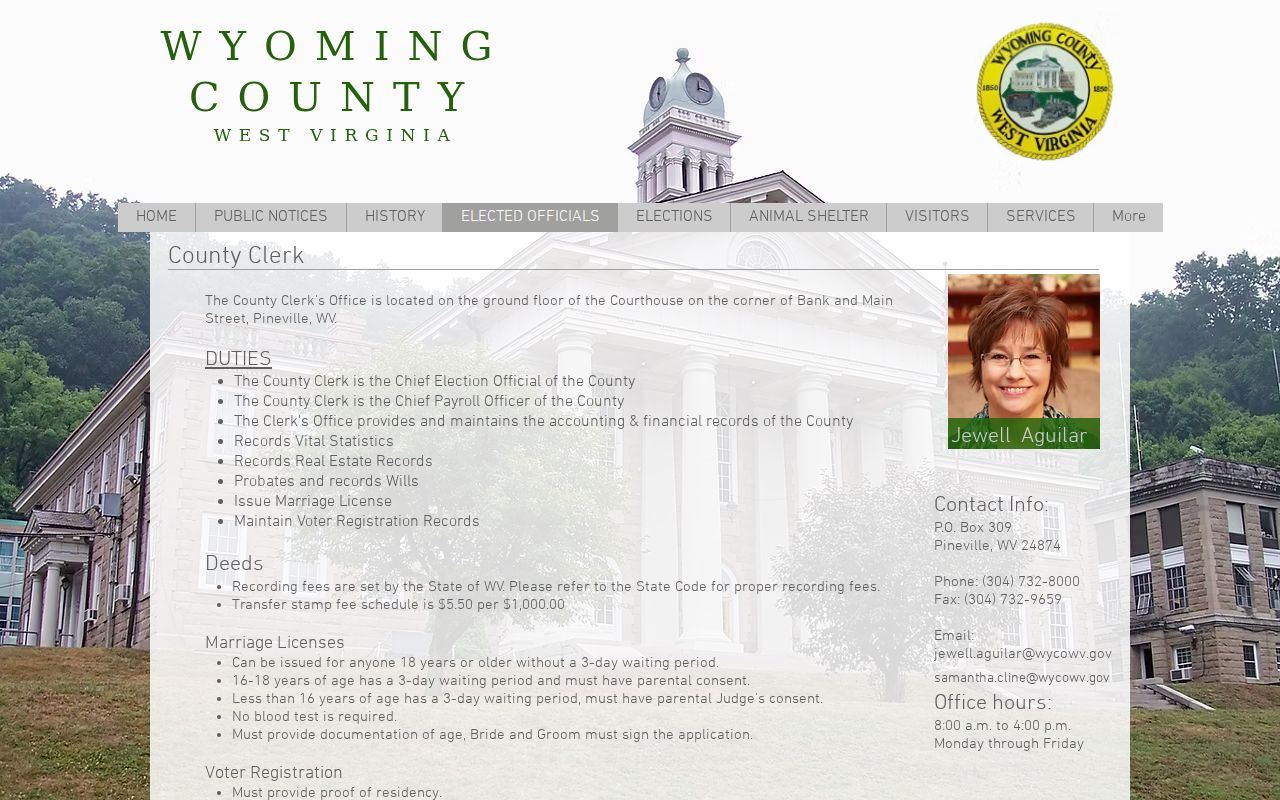
Use the Clerk's contact route for old volumes. Ask how an older index can be checked against an assessor book and page.
Wyoming County Deeds Before Street Numbers
Earlier owners often appeared in deeds by a tract description or adjoining landholder rather than a modern road address.
Older descriptions did not rely on the current E-911 address. A deed may identify a district, creek, ridge, adjoining tract, stone, tree, road or family name. Mountain parcels could be described by calls and monuments even when a later tax card has a modern road name. Copy the full legal description from one deed into your notes before looking for its predecessor.
The county Assessor warns that rural parcel addresses may lack a street number and recommends street-only searches. That same caution applies more strongly to former owners: a modern address can lead to the tract, but a grantor-grantee index and the deed text carry the historical identity.
Each step backward should preserve the description from the prior instrument. A creek name or neighbor's name may be more stable than an address, while a later road label can help identify the same tract on the assessment card. When a description changes, look for a cited survey, plat or earlier deed before joining the parcels in a family history.
Oceana and Pineville Deed Clues
The first court met near present-day Oceana in June 1850, and the early county seat was tied to Cassville and the Oceana area. Residents voted to move the seat to Pineville in 1907. Pineville had first been incorporated as Rock View in 1871, then took the Pineville name in 1880 when a post office reopened under that name. Those changes supplied useful period terms for newspaper, deed and family-history research.
The seat move was followed by a temporary wooden courthouse in 1908 and a stone building in 1916. No official source in the research confirmed a courthouse fire or a lost decade of land books. If a search stops, treat the gap as an access or indexing question and ask the Clerk before drawing conclusions.
The county seat's location changed, but the record is still county-held. A pre-1907 newspaper may use Oceana, Cassville or a nearby district, while a later filing will point toward Pineville. Use the date and parties to understand the reference, then rely on the Clerk's volume citation rather than searching only by the town named in a family note.
Following the Wyoming County Deed Chain Back
A previous owner becomes a useful lead only when the land description and transfer date match. Both must point to the same parcel. Start from the most recent recorded grantee, then work back deed by deed.
Each earlier deed names a grantor. That grantor likely appeared as a grantee on a still earlier transfer. The parties alone never prove the chain. Legal descriptions, dates, districts, book and page numbers matter. Cross-references tie each record to the same land.
- Locate the newest deed into the current grantee and copy the full description.
- Read the grantor and recording reference from that instrument.
- Search that grantor as an earlier grantee, matching the land description and transfer date.
- Continue into older indexes and books when the record room confirms the range.
- Grantor
- The party that gave the interest in that instrument.
- Grantee
- The party that received the interest.
- Chain of title
- The linked sequence of instruments for one tract.
- Legal description
- The land wording that helps match historic transfers when street numbers did not exist.
Work a Wyoming County tract from the most recent deed reference backward. Move from each grantor to the earlier grantee entry. Repeat the step until the index runs out or you hit the county formation date. A catalog index covering 1850 through 1969 is a historical lead, nothing more. It does not promise a digitized copy of every instrument before or after those years. When the trail thins, ask the Clerk. The Clerk can point you to the local book and index volume for the era you have reached.
Never link records on a shared name alone. Compare the district, the creek, adjoining owners, acreage, and lot language. Check the date and cited prior book and page. A release, corrected deed, estate filing, or court order can explain it. It shows why a party or parcel label shifts between transfers. Keep those supporting items in your chain notes so the property records stay coherent.
Estate Transfers and Wyoming County Former Owners
A chain sometimes changed through an estate rather than a direct sale. A will might name land or a beneficiary, while an executor or administrator deed, a court order of sale, or a later conveyance supplied the land-record transfer. Search the decedent's probate file and then return to the recorded instrument index under the fiduciary and heirs.
A death certificate establishes death facts but is not itself a deed. Current death records have access limits, while records older than 50 years generally open under the state rule with statutory redactions. Keep probate and vital records in their own roles when reconstructing previous owners.
Wyoming County Owner History Fallback
The Historical Society promotes genealogy help, surname lists, newspaper extracts, and volunteer assistance. The county library provides local service and copies. Its public page names no exact city-directory years, obituary runs, or licensed databases. Call ahead before a visit. Treat any newspaper notice as a clue pointing toward a deed. Do not treat it as proof the conveyance happened.
For early landowners, log spelling variants along with former place names, districts, streams, and neighbors. Try both Pineville and Rock View when tracing the later county seat. Try Oceana or Cassville for early county references. A name match means little on its own. It gains weight only when the parcel description fits too.
Each source answers a different question. A cataloged book serves one purpose. A local index, a newspaper item, and a family paper serve separate purposes. Verify a transfer with the filed instrument or the book. Then keep the historical material as context for spelling and dates. When no online record turns up, ask the Clerk to search by the parties, an approximate date, and the legal description. A gap in the records is not evidence that an owner was absent.
How Far Wyoming County Owner Records Reached
The deed-book catalog starts with Wyoming County's creation in 1850. It describes volumes through 1902 and an index through 1969. Treat those years as a framework for tracing former owners, not a verified digital cutoff. The county records show no confirmed courthouse loss. Some tracts sat in Logan County before Wyoming County formed. Determine that first. Then check the relevant catalog or archive.
Lawful use. Former-owner research is useful for house history and title diligence. Do not use a historical name trail to track or harass any living person; consult the Clerk or a title professional when a formal conclusion is needed.